Military Time for Nursing and Medical Professionals

A single misread time can mean the difference between a patient receiving medication at 7:00 in the morning versus 7:00 at night. In healthcare, this distinction isn’t just about convenience it’s about patient safety. Military time, also known as the 24-hour clock, eliminates the ambiguity that comes with AM and PM designations.
For nursing students preparing for clinicals, nurses documenting in electronic health records, paramedics coordinating emergency responses, and medical assistants managing medication schedules, mastering military time is a non-negotiable skill.
On this page
What Is Military Time?
Military time is a timekeeping system that uses a 24-hour clock instead of the 12-hour clock with AM and PM designations. The day begins at 0000 (midnight) and runs through 2359 (one minute before the next midnight). Unlike standard time, which repeats the same hour numbers twice daily, military time assigns a unique number to each hour of the day. This eliminates confusion about whether a documented time refers to morning or evening hours.
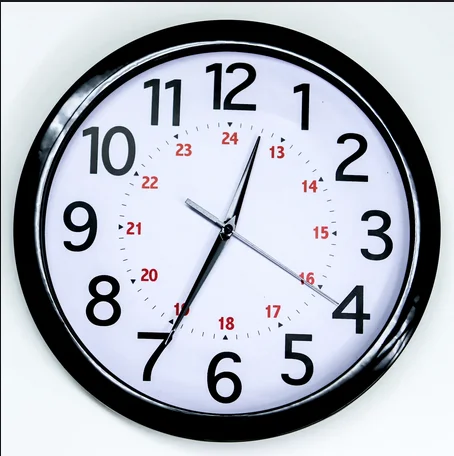
Key differences between military time and standard time:
| Feature | Standard Time | Military Time |
|---|---|---|
| Hour range | 1-12 (repeats twice) | 0000-2359 (no repetition) |
| AM/PM required | Yes | No |
| Leading zeros | Optional | Required |
| Midnight notation | 12:00 AM | 0000 |
| Noon notation | 12:00 PM | 1200 |
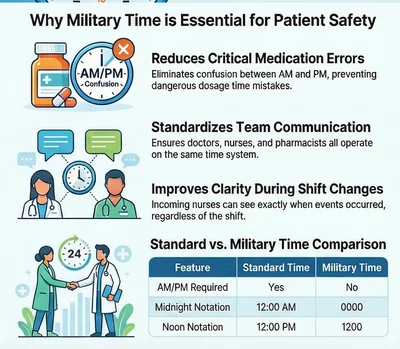
Healthcare documentation avoids AM and PM because these designations create opportunities for error. A quickly written “7” without its AM or PM suffix, a smudged notation, or a verbal miscommunication during shift handoff can result in medications given at the wrong time. Military time removes this vulnerability entirely.
Why Military Time Is Used in Nursing and Healthcare
Healthcare facilities worldwide have adopted military time as the documentation standard for several critical reasons.
- Reducing medication administration errors: When a medication order reads “give at 0800,” there is zero ambiguity. The medication is due at 8:00 in the morning, period. This clarity prevents the potentially dangerous confusion that could occur with standard time notation.
- Improving clarity during shift changes: Nurses work rotating shifts that span day and night hours. During handoff reports, using military time ensures that incoming nurses understand exactly when medications were given and when they’re next due, regardless of which shift they’re starting.
- Standardization across healthcare teams: From the pharmacy filling medication orders to the nurse administering them, from the physician writing notes to the billing department processing records, everyone operates on the same time system. This standardization reduces communication errors across departments.
- Documentation in clinical systems: Medication Administration Records (MARs), Electronic Health Records (EHRs), and clinical charting systems are designed around military time. Nursing students will encounter this format from their first clinical rotation through their entire careers.
How to Read and Write Military Time
Reading and writing military time follows straightforward rules that become second nature with practice.
- Understanding hours and minutes: Military time uses four digits. The first two digits represent the hour (00-23), and the last two digits represent the minutes (00-59). For example, 0845 means 8 hours and 45 minutes, or 8:45 AM in standard time.
- Leading zeros in documentation: Hours before 10:00 AM always include a leading zero. This maintains the four-digit format and prevents confusion. The time 9:30 AM is written as 0930, not 930. Proper documentation requires all four digits.
- Midnight and noon clarification: These two times often cause confusion for beginners.
| Time | Military Notation | Common Mistakes |
|---|---|---|
| Midnight (start of day) | 0000 | Writing 2400 or 1200 |
| Noon | 1200 | Writing 0000 or 1200 PM |
| One minute after midnight | 0001 | Writing 2401 |
| One minute before midnight | 2359 | Writing 0059 |
In healthcare documentation, midnight is always written as 0000, marking the beginning of a new day. Some facilities may use 2400 to indicate the end of a day, but 0000 is the more universally accepted notation.
Converting AM Time to Military Time
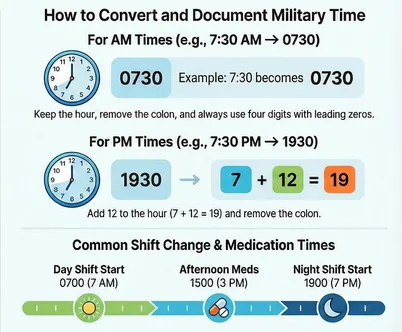
Converting morning hours to military time is simple because the hour numbers remain the same you just need to format them correctly.
- Step-by-step conversion rules for AM times: For times from 1:00 AM to 9:59 AM, add a leading zero and remove the colon. For times from 10:00 AM to 11:59 AM, simply remove the colon and the AM designation.
- Examples commonly used in morning medication passes:
| Standard Time | Military Time | Clinical Context |
|---|---|---|
| 6:00 AM | 0600 | Early morning vital signs, fasting lab draws |
| 7:30 AM | 0730 | Breakfast medications, insulin administration |
| 8:00 AM | 0800 | Standard morning medication pass |
| 9:00 AM | 0900 | Scheduled antibiotics, wound care |
| 10:00 AM | 1000 | Mid-morning assessments |
| 11:45 AM | 1145 | Pre-lunch blood glucose check |
Common mistakes to avoid: The most frequent error is forgetting the leading zero for single-digit hours. Writing “800” instead of “0800” may seem minor, but it violates documentation standards and can create confusion. Always use four digits.
Converting PM Time to Military Time
Converting afternoon and evening hours requires one additional step: adding 12 to the hour.
- Step-by-step conversion rules for PM times: For times from 1:00 PM to 11:59 PM, add 12 to the hour, then remove the colon and PM designation. The exception is 12:00 PM (noon), which becomes 1200 you don’t add 12 because noon is already the 12th hour.
- The “add 12” method explained: When you see a PM time, take the hour number and add 12. So 1 PM becomes 13 (1+12), 5 PM becomes 17 (5+12), and 11 PM becomes 23 (11+12). Evening and night shift examples:
| Standard Time | Calculation | Military Time | Clinical Context |
|---|---|---|---|
| 12:00 PM | No change | 1200 | Noon medications |
| 1:00 PM | 1 + 12 = 13 | 1300 | Afternoon antibiotics |
| 5:00 PM | 5 + 12 = 17 | 1700 | Dinner medications |
| 6:00 PM | 6 + 12 = 18 | 1800 | Evening vital signs |
| 7:00 PM | 7 + 12 = 19 | 1900 | Shift change, handoff reports |
| 9:00 PM | 9 + 12 = 21 | 2100 | HS (hour of sleep) medications |
| 11:30 PM | 11 + 12 = 23 | 2330 | Night shift assessments |
Military Time Conversion Chart
This comprehensive chart covers all 24 hours with their standard time equivalents and common clinical uses.
| Military Time | Standard Time | Common Clinical Use |
|---|---|---|
| 0000 | 12:00 AM (Midnight) | Start of new day, midnight medications |
| 0100 | 1:00 AM | Night shift rounds |
| 0200 | 2:00 AM | Q4H medication checks |
| 0300 | 3:00 AM | Night shift assessments |
| 0400 | 4:00 AM | Early lab draws |
| 0500 | 5:00 AM | Pre-operative preparations |
| 0600 | 6:00 AM | Morning vital signs, fasting labs |
| 0700 | 7:00 AM | Day shift begins, handoff |
| 0800 | 8:00 AM | Morning medication pass |
| 0900 | 9:00 AM | Scheduled treatments, antibiotics |
| 1000 | 10:00 AM | Mid-morning assessments |
| 1100 | 11:00 AM | Pre-lunch preparations |
| 1200 | 12:00 PM (Noon) | Noon medications, lunch insulin |
| 1300 | 1:00 PM | Afternoon medications |
| 1400 | 2:00 PM | Afternoon assessments |
| 1500 | 3:00 PM | Shift change preparations |
| 1600 | 4:00 PM | Evening shift assessments |
| 1700 | 5:00 PM | Dinner medications |
| 1800 | 6:00 PM | Evening vital signs |
| 1900 | 7:00 PM | Night shift begins, handoff |
| 2000 | 8:00 PM | Evening medication pass |
| 2100 | 9:00 PM | HS medications, bedtime insulin |
| 2200 | 10:00 PM | Night rounds begin |
| 2300 | 11:00 PM | Late night assessments |
Common Military Time Conversions in Healthcare
Healthcare professionals frequently encounter certain times more than others. Here are quick references for the most common conversions.
What Is 1500 Military Time?
1500 in military time equals 3:00 PM in standard time. This time often marks shift change preparations in many hospitals. A nurse documenting “vital signs obtained at 1500” indicates the assessment was completed at 3:00 PM. In clinical charting, 1500 frequently appears for afternoon medication doses and pre-shift documentation.
What Is 1600 Military Time?
1600 in military time equals 4:00 PM in standard time. On Medication Administration Records (MARs), you’ll commonly see scheduled medications listed for 1600, particularly for drugs ordered four times daily (QID). For example, an antibiotic order reading “Amoxicillin 500mg PO QID—0800, 1200, 1600, 2000” schedules the third dose at 4:00 PM.
What Is 5pm in Military Time?
5:00 PM converts to 1700 in military time (5 + 12 = 17). This time typically corresponds with dinner medication administration and the beginning of evening clinical activities. Many facilities schedule their dinner meal trays and associated medications around 1700.
What Is 6pm in Military Time?
6:00 PM converts to 1800 in military time (6 + 12 = 18). Evening vital signs are commonly documented at 1800, and this time often marks the transition period between day and evening clinical activities. Patients on twice-daily (BID) medications often have their second dose scheduled around 1800.
What Is 7pm in Military Time?
7:00 PM converts to 1900 in military time (7 + 12 = 19). In many hospitals, 1900 marks the official start of the night shift and the handoff report between outgoing and incoming nurses. Scheduled medications at 1900 are typically the responsibility of the night shift nurse.
Practice Problems: Military Time
Test your military time skills with these NCLEX-style practice questions based on realistic clinical scenarios.
- Question 1: A physician orders Metoprolol 25mg PO to be given at 0900 and 2100 daily. A patient asks what times they should expect their blood pressure medication. What is the correct response?
- Answer: 9:00 AM and 9:00 PM. The 0900 dose is given in the morning (09 = 9 AM), and the 2100 dose is given in the evening (21 – 12 = 9 PM).
- Question 2: The nurse administered pain medication at 1430. The medication can be repeated in 4 hours. What is the earliest time the next dose can be given?
- Answer: 1830. Adding 4 hours to 1430: 14 + 4 = 18, so the next available time is 1830 (6:30 PM).
- Question 3: During shift report, the off-going nurse states that the patient’s last blood glucose check was at “sixteen hundred.” What time was this in standard time?
- Answer: 4:00 PM. “Sixteen hundred” means 1600, and 16 – 12 = 4 PM.
- Question 4: A patient’s IV antibiotic is scheduled for 0600, 1400, and 2200. Which of these administration times occurs during the night shift (1900-0700)?
- Answer: 0600 and 2200. The 0600 dose falls within night shift hours (before 0700), and the 2200 dose occurs after the night shift begins at 1900. The 1400 (2:00 PM) dose falls during day shift.
- Question 5: A nurse needs to document that a medication was given 15 minutes before midnight. What is the correct military time notation?
- Answer: 2345. Fifteen minutes before midnight (0000) is 23:45 PM, written as 2345 in military time.
Common Mistakes Nurses Make With Military Time
Even experienced healthcare professionals occasionally make military time errors. Recognizing these common pitfalls helps prevent documentation mistakes.
- Confusing midnight and noon: This is the most frequent error. Midnight is 0000 (the start of a new day), while noon is 1200 (the middle of the day). A helpful memory trick: midnight has the “m” for “0000” (zeros look like the letter O in “midnight”), while noon has the “n” for “1200” (twelve = noon).
- Forgetting leading zeros: Writing “830” instead of “0830” may seem like a minor shortcut, but it violates documentation standards. EHR systems may reject improperly formatted times, and handwritten notes without leading zeros can cause confusion. Always use all four digits.
- Misreading PM times during night shift: Fatigue during overnight shifts can lead to conversion errors. A nurse working at 0200 might accidentally document a time as 1400, mixing up their AM and PM conversions. When tired, double-check your conversions by confirming the time makes sense within your current shift.
- Using 2400 instead of 0000: While some systems accept 2400 to indicate the end of a day, most healthcare facilities use 0000 to indicate midnight. Using 2400 can create confusion about which day an event occurred on. Stick with 0000 for midnight documentation.
- Adding 12 to noon: Remember that 12:00 PM (noon) is already 1200 in military time. Adding 12 would incorrectly give you 2400, which represents a different time entirely.
Tips for Mastering Military Time in Clinical Practice
Building military time fluency takes practice, but these strategies accelerate the learning process.
- Mental math shortcuts: For PM conversions, subtract 2 from the military hour’s second digit to get the standard hour. For example, 1700 → 7 – 2 = 5 PM. For 1400 → 14, and 4 – 2 = 2 PM. This works for all hours from 1300-2300.
- The “after noon” method: If the military time is 1300 or greater, you know it’s PM. Simply subtract 12 mentally. For times less than 1200, the military hour equals the standard AM hour.
- Documentation habits that build fluency: When charting, mentally say the military time as you write it. “Medication given at sixteen hundred” reinforces the connection between 1600 and 4:00 PM. This auditory reinforcement accelerates recognition.
- Use anchor times: Memorize key times that occur frequently in your practice area. If your morning medication pass is always at 0800 and evening pass is at 2000, these become reference points. Any time close to these anchors becomes easier to convert.
- Practice during downtime: When waiting for an elevator or during a quiet moment, glance at a clock and convert the time to military format. This builds automatic recognition without dedicated study time.
- Clinical confidence builders: Start by writing military times on your personal notes during clinicals, even if your preceptor uses standard time verbally. This gives you low-stakes practice before you’re responsible for official documentation.
Military Time and Medication Safety
The relationship between military time and patient safety extends beyond simple convenience it’s a fundamental component of medication error prevention.
- How military time supports patient safety: Medication errors are among the most common preventable adverse events in healthcare. The Institute for Safe Medication Practices (ISMP) recognizes time-related confusion as a contributing factor to medication errors. Military time eliminates the entire category of AM/PM errors.
- Error reduction in real scenarios: Consider a patient receiving a medication ordered for 0800 and 2000. Using standard time, a busy nurse might document “8:00” without the AM or PM designation. A subsequent caregiver reviewing the chart cannot determine when the medication was actually given. Military time notation (0800 or 2000) provides instant clarity. Similar to pharmacy abbreviations in prescription.
- Communication across care teams: During verbal orders, shift reports, and interdisciplinary rounds, military time ensures everyone shares the same understanding. When a physician says “start the infusion at sixteen hundred,” there’s no need to clarify whether morning or evening is intended.
- Joint Commission and institutional expectations: The Joint Commission and other accrediting bodies require clear, unambiguous documentation. While they don’t mandate military time specifically, most healthcare facilities have adopted it as a best practice for meeting documentation clarity standards. New hires are expected to use military time from day one. EHR system integration: Modern Electronic Health Record systems are built around military time. Medication barcoding systems, automated alerts, and clinical decision support tools all rely on accurate military time entry to function correctly.
Frequently Asked Questions About Military Time
How is midnight documented in healthcare?
Midnight is documented as 0000, representing the start of a new calendar day. Some facilities may accept 2400 to indicate the very end of a day, but 0000 is more universally used and preferred. When a medication is due “at midnight,” document it as 0000 of the new day.
Why is 0000 used instead of 2400?
Using 0000 for midnight clearly indicates the start of a new day, which is important for date-sensitive documentation. If a medication is given at midnight on January 15th, documenting it as “0000 on January 15” is clearer than “2400 on January 14” or “2400 on January 15” (the latter being technically incorrect). Most EHR systems are programmed to use 0000.
Do all hospitals use military time?
The vast majority of hospitals, clinics, and healthcare facilities in the United States and internationally use military time for clinical documentation. Some smaller outpatient facilities or physician offices may use standard time, but acute care settings universally employ the 24-hour clock. Students and new graduates should assume military time will be required until told otherwise.
How do I pronounce military time?
Military time is typically pronounced as the full number. For example, 0800 is said as “oh eight hundred” or “zero eight hundred.” The time 1430 is pronounced “fourteen thirty.” In casual conversation, some healthcare workers may say “eight o’clock” but will clarify with military notation when documenting.
What if I make a military time error in my documentation?
Follow your facility’s policy for correcting documentation errors. In paper charts, this typically means drawing a single line through the error, writing the correction, and initialing. In EHRs, you’ll follow the system’s correction or addendum process. Never attempt to hide documentation errors—transparency is essential for patient safety and legal protection.